A container leaving South America for Asia crosses three climate zones and up to 40 days of transit. Every temperature change turns the vapour in the air into water that falls on the cargo. Our job is to calculate, shipment by shipment, exactly what it takes to stop that from happening.
3x+ its weightIn water retained · COA 60°C / 90% RH
4 linesHumidity · Stowage · Strapping · Temperature
3 areasManagement · Technical · Operations
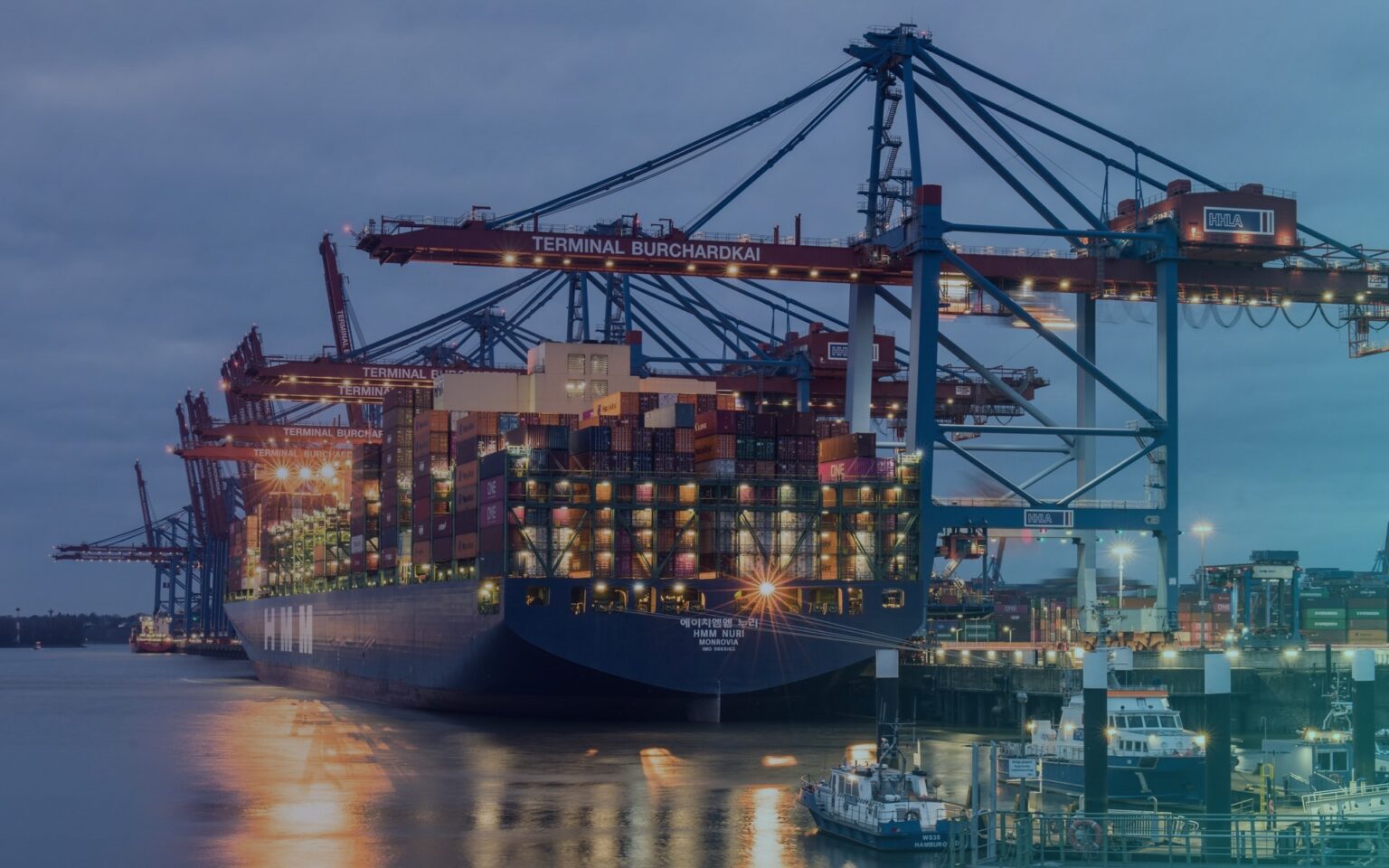
Container terminal · where the transit begins
The problem
Inside the container, it rains
This is not a metaphor. It is physics, it happens on almost every long transit, and most exporters only discover the result when their buyer opens the doors at destination.
Cargo secured inside the container
1
The cargo ships with water
Wooden pallets, cardboard boxes and the product itself carry internal moisture. A single pallet can release several litres into the container air.
2
The sun evaporates it
By day the container roof exceeds 50 °C. The hot air absorbs that moisture and the whole load is wrapped in vapour.
3
Night brings the temperature down
When crossing cold waters or at nightfall, the air drops below its dew point. The vapour can no longer stay in suspension.
4
And it falls on your cargo
It condenses on the roof and drips. Collapsed boxes, peeling labels, rust, mould. The cycle repeats every 24 hours for the whole transit.
Our job is to remove that vapour before it reaches the dew point
A correctly sized desiccant captures the moisture while it is still in the air, so there is never liquid water available to fall. Correctly sized means calculated for your product, your route and your transit days, not a standard quantity per container.
Brand and track record
A young brand with long experience
SECAL is a recent brand backed by a team with three decades in cargo protection. That combination is deliberate: experience defines what to make, and a new brand lets us make it without the limits of an inherited catalogue.
Stowage and consolidation at origin
Track record — Since the 1990s
Three decades building the category
Our team introduced container desiccants and lashing systems into a market where nobody used them. We trained plants, taught operators and wrote the first stowage protocols that many exporters still follow. That accumulated know-how is what defines every specification today.
Brand — Since 2023
SECAL, our own line
We stopped distributing other companies’ technology to make our own. SECAL is produced to our own specification with international partner plants, with a certificate of analysis for every batch. A young brand, free of catalogue ties, designed for the routes and climates our clients actually face.
Market validation
Young brand, demanding clients
The reasonable question about a brand only a few years old is whether the market backs it. The answer lies in who buys from us: global operators who choose suppliers not by catalogue or price, but through supplier qualification.
We did not get in on price. We got in through supplier audits.
Global shipping line
A world top-5 carrier
An ocean carrier with a network in more than a hundred countries and its own supplier qualification standards.
Port operator
A terminal operator with global reach
A port group operating in dozens of countries, with documentation and safety requirements for every supply that enters the terminal.
Export sector
Fresh produce and industrial cargo
Companies whose product travels perishable or moisture-sensitive and gets no second chance at destination.
Qualification
Registration and assessment as a supplier, with documentary and financial checks before the first order.
Technical documentation
Certificate of analysis, technical data sheet and safety data sheet required per batch, not per catalogue.
On-time delivery
Shipping windows that do not move. Delivery to the plant is measured against the sailing date.
Repeat orders
The indicator that matters: clients who reorder shipment after shipment after auditing the result.
Structure
Three areas, one operation
Our cargo protection specialists work across three functional areas, each with a lead and a defined scope, supported by an external network of manufacturing, laboratory, logistics and distribution that multiplies that capacity.
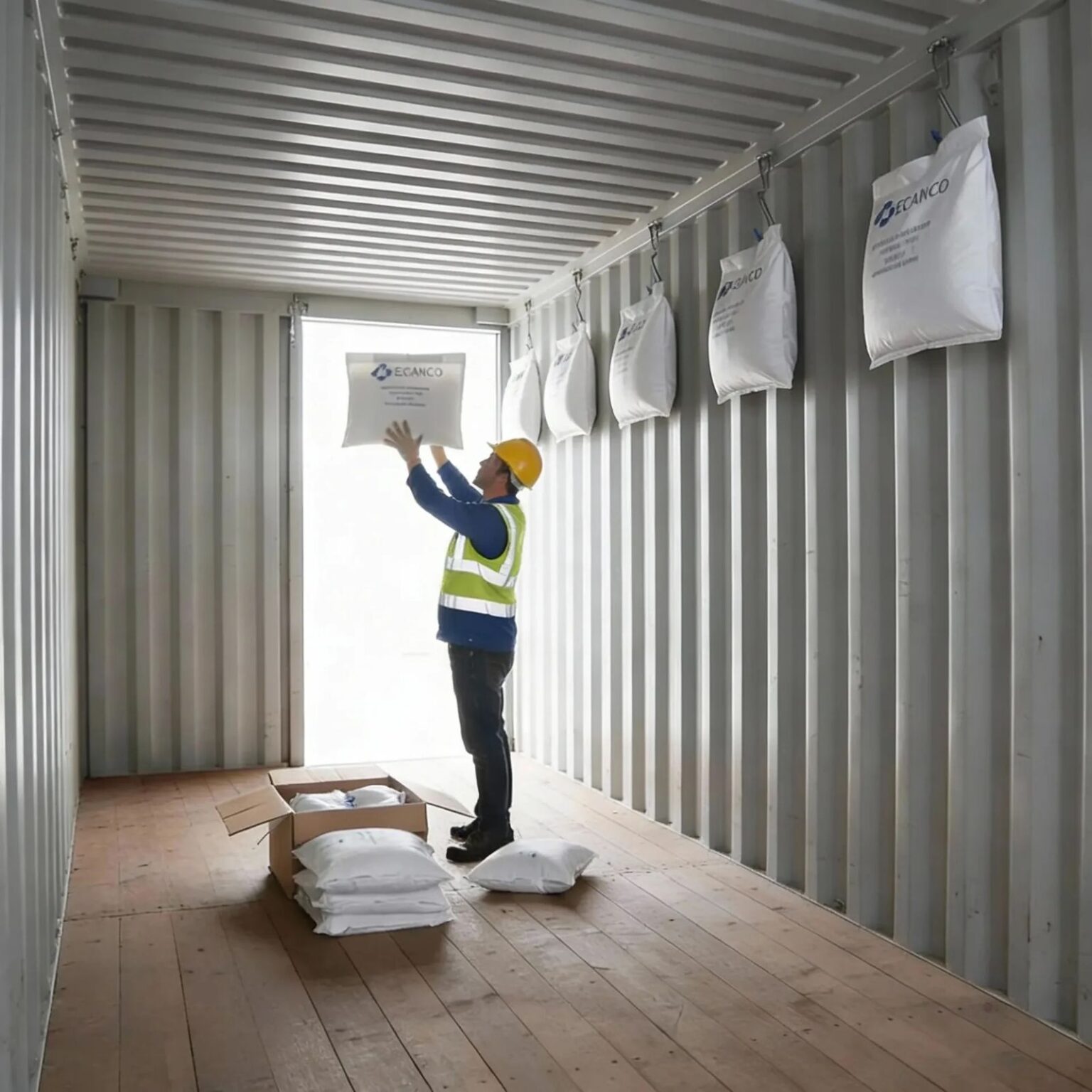
Installing desiccants inside the container
AREA 01
Management
Lead: Miguel Torres Bohl, General Manager
Commercial and brand strategy
International manufacturing partnerships
Distributor network development
Product specification
Partner and key account relations
AREA 02
Technical
Lead: Joel Valdez, Cargo Protection Specialist
Risk diagnosis per shipment
Desiccant, stowage and strapping calculations
On-site training at the client’s plant
Calculation tools and technical content
Data logger analysis and scheme adjustment
AREA 03
Operations
Lead: Orlando Santistevan, Operations Assistant
Supply and stock control
Dispatch and delivery to the plant
Batch document traceability
Import and customs coordination
After-delivery support
Extended network
Beyond the in-house team, every protected shipment involves partners working to our specification and under our control.
Partner plants
International manufacturing to SECAL specification, with control of formulation, weight and packaging.
Laboratory
Absorption testing and a certificate of analysis for every batch, with the test conditions stated.
Logistics network
Import, warehousing and distribution for delivery to the client’s plant within its shipping window.
Distributors
Exclusive partners per country who replicate the commercial and technical model in their territory.
The product
Retains more than 3 times its weight in water
Absorption of 307 % of its own weight, measured at 60 °C and 90 % relative humidity according to the batch certificate of analysis. We state the test conditions because they change the result: we publish the figure together with the document that supports it, available to any client who asks for it.
Certified figures, not promises
Every number we publish has a COA behind it and stated test conditions. If it is not on the certificate, we do not say it.
Proven on the toughest route
Perishable fresh produce, coastal humidity and transits of up to 40 days to Asia and Europe. What survives that corridor works on any other.
One rejected container costs more
Than years of protection. Getting the desiccant and stowage calculation right is the cheapest insurance an exporter can buy.
How we work
From shipment to scheme
We do not sell from a catalogue. Every recommendation comes from the real conditions of your shipment, and it is documented so your team can repeat it without us.
Preparing export cargo
Shipment diagnosis
We review product, packaging, moisture at origin, route and transit time. That is where your desiccant load comes from, not from a rule of thumb.
Stowage configuration
We define the air bag layout and strapping scheme according to density, stacking height and container type, using the SECAL technical calculators.
Documentary backing
Certificate of analysis, technical data sheet and safety data sheet for every batch. Documentation ready for your buyer’s audit at destination.
Verification at destination
Temperature and humidity data loggers show what really happened inside the container, and the scheme is adjusted for the next shipment.
What we often hear
Three reasons not to protect your cargo
“It has never happened to me.”
Moisture damage almost never comes back as a formal claim. It comes back as a negotiated credit note, a buyer who lowers the price of the next order, or one who simply stops buying. If nobody measures the cause at destination, the problem exists but does not show up in your numbers.
“I already put in some silica gel sachets.”
Silica gel and container desiccants solve different problems. The first protects small, closed volumes; the second has to handle the litres of water circulating in 67 cubic metres for weeks. The difference is not in the material, it is in the capacity and the calculation.
“My freight forwarder takes care of it.”
Your forwarder coordinates the shipment; it does not calculate the hygroscopic load of your product. Nobody in the chain knows the moisture of your goods at origin except you. That is why the scheme is defined before stowage, with your product on the table.
International network
One distributor per country
SECAL grows with exclusive partners, not resellers. Whoever takes a territory receives a complete business: a certified product line, calculation tools, sales materials, technical training and territory protection. We do not hand over a catalogue; we hand over an operation ready to sell.
International ocean transit
Certified product
Our own line with a COA per batch, and technical and safety data sheets in Spanish and English.
Sales tools
Desiccant, air bag and strapping calculators, a quoting tool and sales material ready for your market.
Technical training
We train your team with the same know-how we used to open up the category three decades ago.
Territory exclusivity
One partner per country. Your commercial investment does not compete against us or another distributor.
Next step
We will calculate your next shipment
Send us your product, packaging type, destination and estimated transit days. Our specialist prepares the complete scheme and sends it back at no cost and with no obligation to buy.
Calculated quantity
The desiccant you need for your hygroscopic load and real transit days.
Layout in the container
Where each unit goes, plus the air bag and strapping scheme where needed.
Technical documentation
Certificate of analysis, technical data sheet and safety data sheet for your buyer at destination.
Cost per container
The exact figure, so you can compare it with the value of the cargo you are protecting.
Reply within 48 business hours · Free · No obligation to buy
Based outside Peru?
Represent SECAL in your country
Exclusive distribution
If you work in logistics, packaging or industrial supplies and are looking for a line of your own with technical backing, let’s talk about exclusivity for your territory. One partner per country.
A certified line with a COA per batch, technical calculators, a quoting tool, sales material and training for your team. Not a catalogue: an operation ready to sell.